


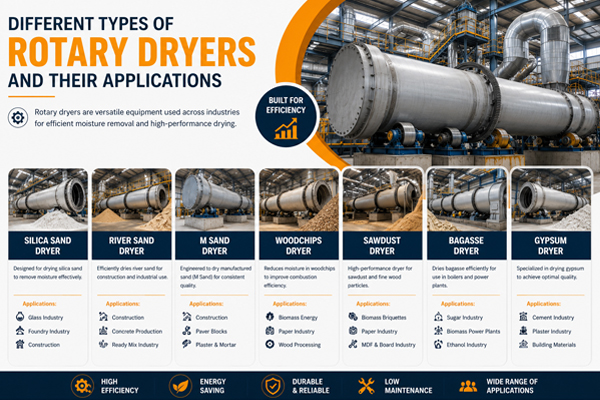
Different Types of Rotary Dryers and Their Applications
Rotary dryers are among the most widely used industrial drying systems for reducing moisture from bulk solids and granular materials. Their continuous operation, high production capacity, and excellent thermal efficiency make them suitable for industries such as mining, construction, biomass, chemicals, fertilizers, minerals, recycling, and food processing. Selecting the right rotary dryer improves product quality, reduces energy consumption, and increases plant productivity.
This guide explains how rotary dryers work, the major types available, and the industries where each type is commonly used.
What is a Rotary Dryer?
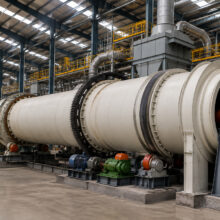
A rotary dryer is a rotating cylindrical machine that removes moisture from wet material by exposing it to a controlled stream of heated air. Internal lifting flights continuously lift and shower the material through the hot air, providing efficient heat transfer and uniform drying. Rotary dryers are available in custom sizes and capacities to suit specific industrial requirements.
How Does a Rotary Dryer Work?
The process begins with feeding wet material into the rotating drum. As the drum rotates, specially designed lifting flights cascade the material through hot air generated by a burner or hot air generator. Moisture evaporates and is carried away with the exhaust air while cyclone separators and dust collectors recover fine particles. The dried material exits the discharge end ready for storage or further processing.
Different Types of Rotary Dryers
Silica Sand Dryer
Used for drying silica sand used in glass manufacturing, foundries, ceramics, water filtration and construction. Produces uniform moisture reduction and free-flowing sand.
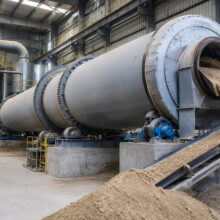
River Sand Dryer
Designed for washed river sand used in ready-mix concrete, plaster, and infrastructure projects. Improves storage, handling and batching accuracy.
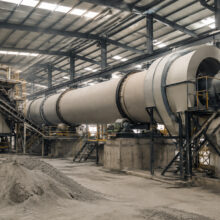
M Sand Dryer
Developed for manufactured sand processing plants. Ensures consistent moisture before use in dry mortar and concrete production.
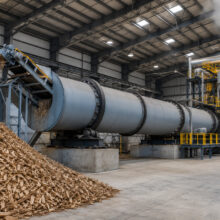
Woodchips Dryer
Widely used in biomass fuel, MDF, paper and pellet industries. Reduces moisture to improve combustion efficiency and pellet quality.
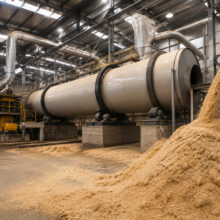
Sawdust Dryer
Ideal for pellet plants, briquette plants and biomass processing. Produces uniform moisture for improved calorific value and manufacturing efficiency.
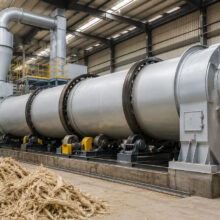
Bagasse Dryer
Designed for sugar mills and biomass power plants. Removes moisture from sugarcane bagasse to increase fuel efficiency and storage life.
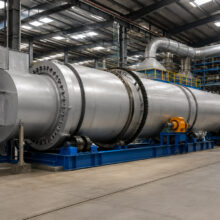
Zinc Carbon Dryer
Used in battery recycling and mineral recovery industries to dry zinc carbon material before further processing.
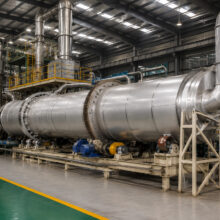
Chemical Dryer
Suitable for powders, salts, pigments, fertilizers and specialty chemicals requiring controlled moisture removal.
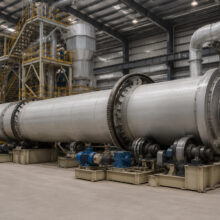
Gypsum Dryer
Used by gypsum processing plants, cement manufacturers and plaster producers to improve grinding efficiency and product quality.
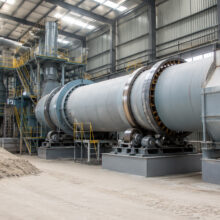
Bentonite Dryer
Engineered for bentonite clay used in foundry, drilling, fertilizers and industrial minerals. Maintains product properties while reducing moisture.
Industries We Serve

Construction Industry

Chemical Industry
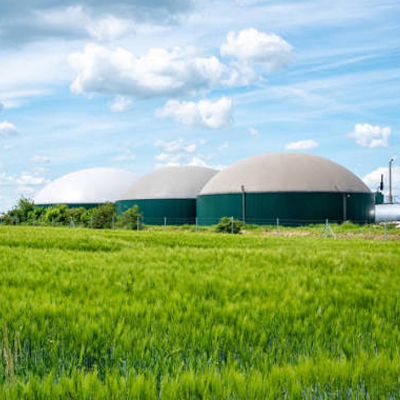
Agriculture & Biomass
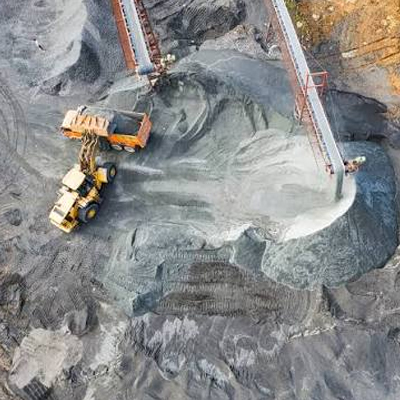
Mining & Minerals

Pharmaceuticals
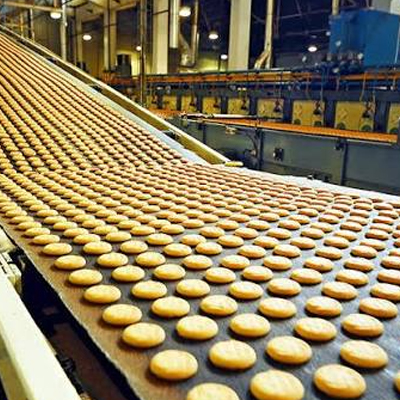
Food Processing

Environmental Sector
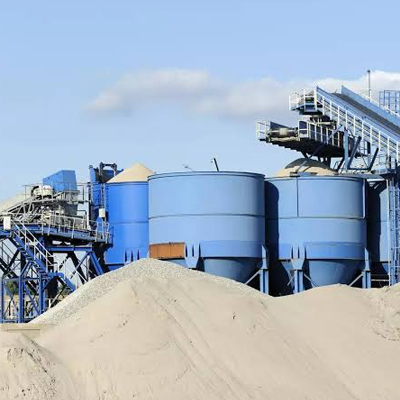
Cement Industry
Advantages of Rotary Dryers
- Continuous high-capacity production
- Uniform moisture reduction
- High thermal efficiency
- Low operating and maintenance costs
- Robust heavy-duty construction
- Long equipment life
- Flexible fuel options
- materials
How to Choose the Right Rotary Dryer
When selecting a rotary dryer, evaluate the type of material, particle size, inlet and outlet moisture, production capacity, heat source, available fuel, automation requirements, plant layout, environmental regulations, and long-term operating costs. Working with an experienced manufacturer helps ensure the machine matches your production objectives.
Comparison Table
| Dryer Type | Material | Industry | Application |
|---|---|---|---|
| Silica Sand | Silica Sand | Glass | Drying before processing |
| River Sand | River Sand | Construction | Concrete & mortar |
| M Sand | Manufactured Sand | Construction | Concrete production |
| Woodchips | Wood Chips | Biomass | Fuel & pellets |
| Sawdust | Sawdust | Biomass | Pellets & briquettes |
| Bagasse | Sugarcane Bagasse | Sugar | Cogeneration |
| Zinc Carbon | Battery Material | Recycling | Metal recovery |
| Chemical | Chemicals | Chemical | Powders & granules |
| Gypsum | Gypsum | Cement | Plaster & boards |
| Bentonite | Bentonite | Mining | Industrial clay |
Frequently Asked Questions
An industrial drying machine that removes moisture from bulk materials using a rotating drum and hot air.
Mining, construction, biomass, chemicals, fertilizers, cement, recycling and more.
Yes, they are designed according to material type, moisture level and production capacity.
Natural gas, diesel, coal, biomass, furnace oil and other compatible fuels.
Routine inspection, lubrication, burner checks, alignment verification and dust collector cleaning.
Conclusion
Rotary dryers play a critical role in modern manufacturing by delivering efficient, reliable, and continuous moisture removal for a wide variety of industrial materials. Whether your application involves sand, minerals, biomass, chemicals, gypsum, or bentonite, selecting the right rotary dryer improves product quality, reduces operating costs, and increases production efficiency. For customized rotary drying solutions, consult an experienced manufacturer that can design equipment around your specific process requirements.
Looking for the right rotary dryer for your application? Contact Rotary Dryer Manufacturer for customized industrial drying solutions, technical consultation, and a competitive quotation.